
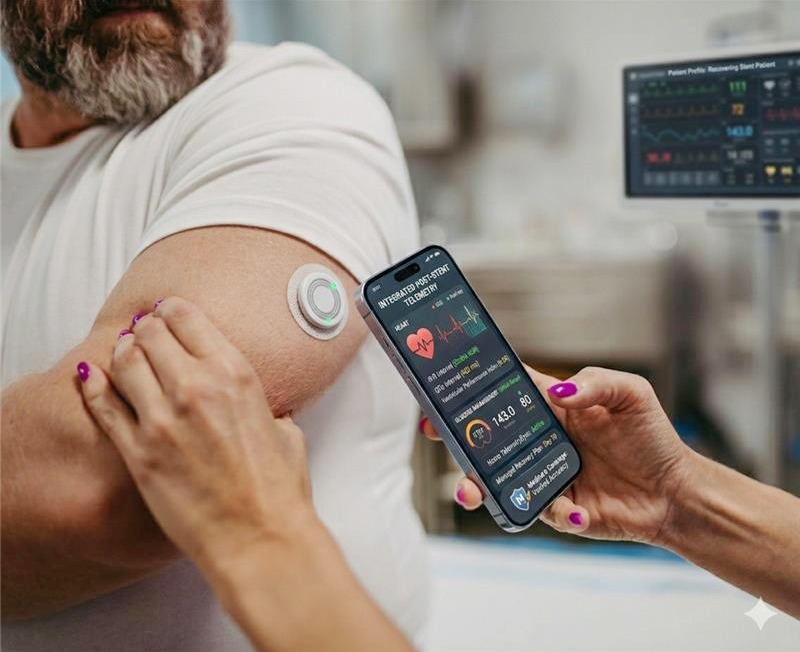
Every February, conversations around heart health tend to focus on routine changes, mindful diet changes, more exercising, and daily checkups. But in 2026, heart health is increasingly being shaped by something less talked about yet far more transformative, connected medical technology operating quietly in patients’ daily lives.
Continuous Glucose Monitoring (CGM) devices have always emerged as one of the most powerful tools redefining preventive cares across United States. Originally designed for diabetes management, CGMs are now assisting clinicians identify cardiovascular risks earlier through continuous metabolic insights delivered via next-gen remote monitoring tools. As healthcare shifts toward home-based care models, these devices are becoming the centre to modern treatment strategies supported by evolving supply chain management healthcare systems and expanding digital infrastructure.
However, innovation alone is never enough!
Providers and DME suppliers must now navigate complex Medicare DME reimbursement changes, stricter healthcare delivery compliance expectations, and rapidly advancing medical supply chain automation environments powered by AI supply chain healthcare and IoT medical equipment tracking.
In this blog, we break down the latest industry shifts, how they impact DME suppliers, which operational areas will be affected most, and how the right support can help organizations stay compliant and financially secure in 2026.
The Latest CMS and Medicare Changes Shaping CGM Distribution in 2026
The growing use of CGM devices is closely connected to recent CMS DME policy update developments across the U.S. healthcare system. Medicare has expanded access to CGMs as part of a broader preventive care strategy, recognizing the connection between glucose management and cardiovascular outcomes.
While expanded eligibility creates new opportunities, it also introduces stricter oversight. Medicare reviewers are no longer validating claims based only on physician orders. Instead, they are evaluating documentation accuracy, medical necessity justification, refill timing, and delivery confirmation.
These Medicare DME reimbursement changes mean suppliers must now demonstrate full lifecycle accountability, from intake to delivery to billing. Understanding DME reimbursement explained principles has therefore become essential for operational teams, not just billing departments.
For many suppliers, reimbursement accuracy has shifted from an administrative task to a compliance-driven process directly tied to revenue protection.
How CGM Growth Is Changing Responsibilities for DME Suppliers?
The rise in CGM prescriptions is creating significant operational pressure for DME suppliers. Unlike traditional durable medical equipment orders, CGMs require recurring shipments, ongoing patient monitoring eligibility, and precise coordination between logistics and billing teams.
This shift places CGMs at the center of modern supply chain management healthcare operations. Even small workflow gaps, delayed shipments, incomplete documentation, or eligibility mismatches can lead to claim denials or payment delays.
As demand increases, suppliers must balance growth with accuracy. The challenge is no longer simply delivering equipment but maintaining consistency across documentation, logistics tracking, and reimbursement workflows while meeting evolving healthcare delivery compliance expectations. In practical terms, CGM growth represents both a revenue opportunity and a revenue risk.
Remote Monitoring and Home-Based Care Are Reshaping Delivery Models
CGMs function as advanced remote monitoring tools, enabling clinicians to track patient data continuously without regular in-person visits. This aligns perfectly with broader telehealth logistics trends transforming healthcare delivery across the United States.
Patients increasingly receive equipment directly at home through remote healthcare logistics networks supported by digital onboarding and automated fulfillment systems. As a result, suppliers must adapt to contactless medical deliveries while maintaining HIPAA remote delivery standards and accurate proof of delivery DME documentation.
These connected workflows form part of a telehealth connected supply chain where digitalization healthcare logistics ensures faster patient onboarding and therapy continuation. Reliable remote medical equipment supply models are becoming critical because delays in delivery can now impact both patient outcomes and reimbursement eligibility.
Delivery performance is no longer just operational. It is a compliance necessity.
Operational Areas DME Suppliers Will Feel the Impact First
As these industry changes accelerate, several operational areas are expected to experience the most immediate pressure.
Billing teams must adapt to evolving medical device billing compliance expectations and prepare for stricter documentation audit DME reviews. Operations teams will need stronger tracking DME delivery systems and improved last mile medical logistics visibility to meet reimbursement requirements.
Leadership teams, meanwhile, must understand broader healthcare supply chain 2026 trends as competition intensifies under the upcoming DME competitive bidding 2026 environment. Reduced margins mean inefficiencies in inventory management DME processes or delivery coordination can directly affect profitability.
Technology adoption is becoming less about innovation and more about sustainability within a rapidly digitalizing healthcare logistics in digital era environment.
Why Supply Chain Technology Is Becoming Essential and Not Optional?
To manage increasing complexity, many suppliers are turning toward AI supply chain healthcare solutions and predictive analytics supply chain tools. These technologies help forecast recurring CGM demand, automate refills, and reduce operational bottlenecks.
IoT medical equipment tracking and RFID in DME logistics are improving shipment visibility, minimizing disputes related to delivery confirmation. Within modern medical supply chain automation environments, suppliers gain real-time insights into equipment movement, allowing faster issue resolution and stronger audit readiness.
These advancements also support DME delivery cost savings 2026 by reducing manual errors and preventing unnecessary reshipments. As margins tighten, efficient supply chain management healthcare strategies are becoming a defining competitive advantage.
Preparing for Remote Item Delivery (RID) and Compliance Expectations
Another crucial development suppliers must prepare for is remote item delivery DME under evolving CMS reimbursement remote delivery guidance. Understanding what remote item delivery in RID is essential as distribution models shift toward direct-to-patient fulfillment.
The CMS RID rule 2026 emphasizes verified delivery confirmation and clear documentation proof of delivery. Many organizations are already seeing DME claims denials remote delivery when workflows fail to align with updated requirements.
The effects of RID on DME providers highlight a growing reality: logistics, compliance, and billing can no longer operate independently. Accurate coordination between departments is necessary to prevent revenue loss and maintain payer confidence.
Understanding how remote delivery changes DME reimbursements allows suppliers to proactively adjust processes instead of reacting to denials after submission.
How the Right Support Helps Suppliers Navigate These Changes?
Adapting to reimbursement updates, operational transformation, and regulatory shifts simultaneously can be hectic. Many DME suppliers are finding value in partnering with experienced teams that specialize in revenue cycle management DME and compliance oversight.
With coordinated workflows, suppliers can strengthen DME reimbursement optimization, improve eligibility verification accuracy, and maintain alignment with payer policies DME delivery expectations.
External support helps reduce administrative burden while ensuring DME provider compliance standards are consistently met, without any compromise. This allows organizations to focus on growth and patient care while maintaining confidence in billing accuracy and audit readiness.
As CGM adoption continues expanding, having reliable operational support becomes less of a convenience and more of a strategic necessity.
Conclusion
Heart Health Month 2026 highlights how healthcare innovation is extending beyond clinical settings into patients’ homes. CGM devices represent a futuristic approach where continuous monitoring supports preventive care and better cardiovascular results.
For DME suppliers, success in this ever-evolving environment depends on accuracy, correct delivery documentation, accurate eligibility verification, and accurate reimbursement processes supported by modern healthcare delivery systems.
Organizations who prep early for Medicare changes, digital supply chain innovation, and evolving compliance expectations will not only reduce operational risk but also strengthen their position within the future healthcare ecosystem.
Because today, supporting heart health is not only about delivering devices, but also about delivering them correctly, compliantly, and consistently. And with the right operational and billing support from Med Karma professionals, suppliers can confidently navigate these changes while continuing to serve patients effectively.