
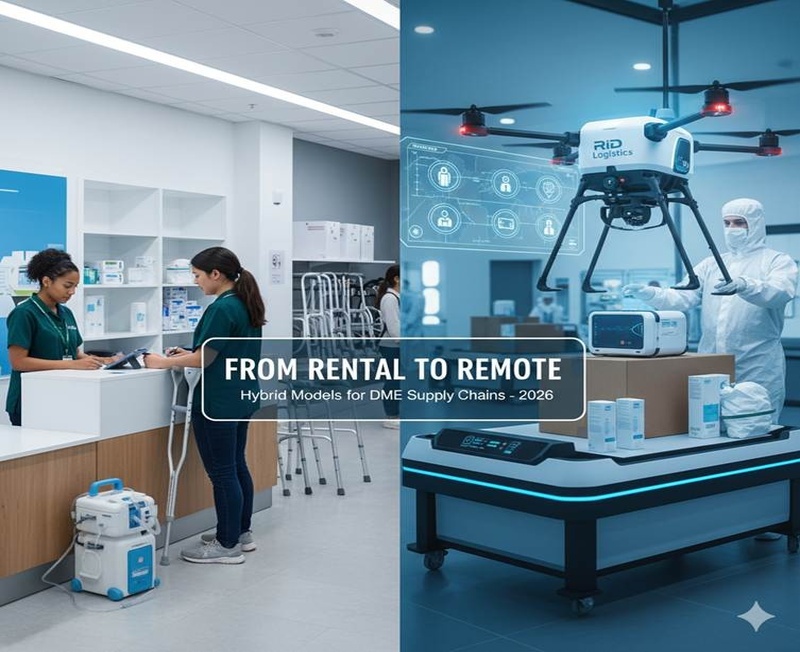
The durable medical equipment (DME) market in the U.S. is entering a major transformation. As the CMS works to renew its competitive bidding program, one of the most significant shifts is the move from traditional local-supplier models toward a new “remote item delivery” (RID) framework. For DME suppliers and billing teams, it is vital to understand and act on this evolution, because it will be central to any future-facing DME bidding strategy.
What is the RID Model?
In its proposed rule for the 2026 cycle, CMS introduced the concept of a Remote Item Delivery (RID) CBP. In this model, suppliers would need to compete for delivering the items by mail or direct shipping, even if they are miles far from the beneficiary’s residence. The RID model broadens the definition of contract suppliers furnishing equipment beyond only local storefronts.
If we see from the operations and billing perspective, the RID model fundamentally alters logistics, pricing, reimbursement levels, and supplier eligibility. It is very much a part of the upcoming competitive bidding DME environment.
Why Does This Matters for the DME Industry?
Be it the supply chain, reimbursement models, or billing workflows, all will be affected because the remote item delivery is more than just a logistics tweak. It signals several ripples.
- Changes in geographic footprint : The suppliers who once had a good hold on local delivery may now have to compete with national, mail-order-centric operations.
- Margin pressure: It is expected that the reimbursement levels could get compressed as the delivery models become more competitive and standardized. The proposed rule indicates that CMS intends to update Single Payment Amounts (SPAs) and how winning bids are assessed in this new environment.
- Billing complications increase: In remote item delivery methods, starting from the documentation, warranty/repair inclusion, transportation expenses, rental vs purchase logic, and even patient education may need new workflow adjustments.
- Regulatory oversight intensifies: The proposed rule comprises changes in accreditation, contract supplier status, definitions of items and eligibility of remote-delivery items. These are all core elements of the DME policy updates CMS is driving.
4 Strategic Moves for 2026
Here’s how billing teams and suppliers should customize their DME bidding best practices to this new remote-delivery environment.
1. Reassess Your Product Portfolio & Delivery Model
Begin with a thorough re-evaluation of which items you currently offer could be incorporated under the RID framework. The rule indicates items “typically furnished from remote supplier locations” will be first candidates.
- Do we have logistics/shipping models in place for coast-to-coast distribution?
- Are the products we supply already delivered remotely (or could be)?
- What purchase Vs rental model do we use, and how might that change under remote delivery?
A strong DME bidding strategy will align your inventory, shipping model, and billing logic to the remote-delivery future, not simply replicate old practice.
2. Adjust Costing, Pricing & Forecasting
In previous competitive bidding rounds, reimbursement for certain items declined sharply. With remote item delivery reducing logistical differences across geographies, cost differentials may decrease, and competition may tighten.
Best practices here include:
- Modeling scenarios where reimbursement drops by 20-30%+ due to remote competitive pressure
- Accounting for shipping, handling, repair logistics and return flows in your cost base
- Ensuring your billing workflows can adjust to changes in rental duration, ownership transitions and bundled service models
Pay close attention to how the competitive bidding DME methodology is changing—especially the proposed revision to how SPAs are calculated.
3. Ensure Supplier Eligibility & Accreditation Compliance
The new rule underscores increased oversight: annual reaccreditation, updated supplier definitions, and expanded item-inclusion are all in motion. To stay ahead, you should:
- Audit your current accreditation status and ensure all locations meet CMS standards
- Review contract supplier status, especially if you ship nationally rather than locally
- Document your remote-delivery logistics, returns and customer service protocols for audit readiness
These align with DME bidding best practices around compliance and supplier risk management.
4. Update Billing Workflows and Documentation
RID entirely changes how you bill and document. Shipping-based delivery, cross-state fulfillment, rental vs purchase rules, accessories service/support, everything may differ.
Billing teams should:
- Update HCPCS coding logic, rental period policies and the modifier usage too
- To ensure that the claims include servicing details and correct routing, implement flagging for remote-delivery items
- Train staff on how to manage returns, repairs and servicing for remotely delivered equipment
This is fully aligned with a robust DME bidding strategy aimed at minimizing denials and maximizing compliance.
Conclusion
As the DME sector transitions from traditional rental/purchase models toward RID (remote item delivery) and national competition, your choice is simple. Either adapt or lag behind.
The top performing suppliers in 2026 will be those who view remote delivery not as a hurdle, but as an opportunity to optimize logistics, reduce cost, expand reach beyond local markets and streamline billing smartly.
At Med Karma, we help DME suppliers in translating every latest CMS rule into clear, revenue-protecting billing actions. From aligning claims with remote delivery requirements to navigating DME policy updates CMS, our professionals ensure that your reimbursements remain error-free, compliant, and optimized even in a highly competitive environment.